Software License Management Tools
Software License Management in 2026: From Policy to Practice
 Chris HerdFebruary 18, 2026
An employee leaves. HR completes the exit. IT revokes access. Finance assumes licenses are reclaimed.
But the laptop is still out there, online, idle, and quietly consuming active software licenses.
This is where many software license management tools fall short. Most platforms focus on tracking entitlements, monitoring usage, and flagging unused seats. Few extend beyond software discovery to the physical devices where those licenses actually live.
Firstbase approaches the issue differently. Instead of treating license management as a standalone task, it connects licenses to the hardware lifecycle itself. When a device is returned, locked, redeployed, or securely wiped, automated workflows trigger the reclaim process, reducing the “orphaned seat” gap that discovery-first tools often leave behind.
In remote and hybrid environments, that distinction matters. Without visibility into device status, audit trails become manual reconciliations, and license recovery depends on assumptions rather than real-world events.
In this guide, we evaluate leading software license management tools in 2026: where they deliver value, where they fall short, and why tying license data to device lifecycle signals is becoming essential for distributed teams.
TL; DR Top License Management Tools in 2026 (At a Glance)
| Platform | Service offering | Scope | Lifecycle depth | Best-fit use case |
|---|---|---|---|---|
| Firstbase | Device-led license recovery | Global hardware + app access | End-to-end execution | Remote teams requiring license recovery tied to hardware return |
| Flexera One | License analytics and compliance | On-premise, SaaS, cloud | Contract → usage insight | Enterprises optimizing spend and audit posture |
| ServiceNow SAM | License governance in ITSM | SaaS, on-premise, cloud | System-of-record lifecycle; No physical lifecycle management. | ServiceNow-centric IT operations |
| ManageEngine AssetExplorer | License tracking + inventory | On-premise, limited cloud | Inventory-level control | SMBs needing basic visibility |
| Rippling IT | HR-driven access control | SaaS + devices | Joiner–leaver automation; No physical lifecycle management. | Fast-growing remote teams |
| JumpCloud | Identity-based access | Cloud and SaaS | Identity-centric control; No physical lifecycle management. | Cloud-native orgs replacing AD |
| Jamf | Apple app & device control | Apple ecosystem | Device execution only | Apple-first IT environments |
The Hidden Cost of Orphaned Licences
Service management tools typically revoke user access during offboarding.
But license recovery actually fails at the execution layer. When devices aren’t retrieved on time (or at all), costs and audit risk accumulate.
How much does it actually cost?
| Cost dimension | What happens in practice | Impact |
|---|---|---|
| Wasted license spend | Licenses remain assigned to inactive or unreached users. | 30–50% of SaaS licenses go unused in most organizations. |
| Annual SaaS leakage | Unreclaimed seats renew automatically. | $18M/year in unused SaaS spend for mid-to-large companies. |
| Offboarding labor | IT manually reconciles access, devices, and apps. | 8 hours per offboarding event spent on cleanup. |
| Per-app cost of manual control | No automated deprovisioning or recovery. | $12,000 per app per year in combined labor + waste. |
| Audit and compliance risk | Entitlements don’t match real usage. | Organizations can reduce software spend by up to 30% with proper controls. |
Firstbase ties license revocation to actual device retrieval, ensuring both the access removal and hardware exit. Take a self-guided tour to see how Firstbase works in action.
Evaluating the Best License Management Tools in 2026
Let’s now see the top 7 license management tools covering all their essentials:
Firstbase
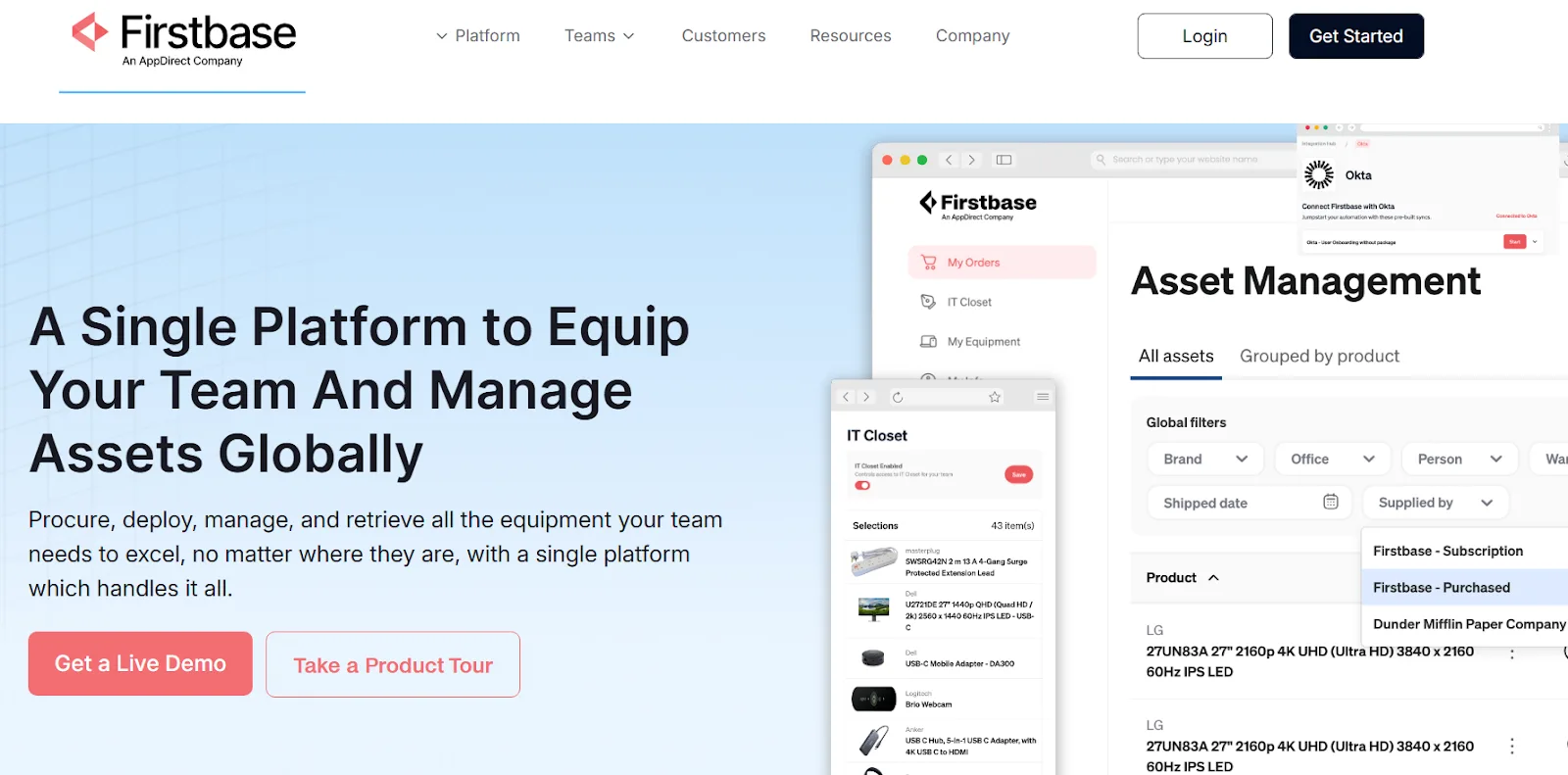
Firstbase is a lifecycle management platform that helps distributed teams equip, track, and manage IT assets from procurement through retirement, all in one place.
The platform combines SaaS automation, integrations, and a global physical operations network so IT, HR, and finance teams can coordinate equipment, inventory, and compliance without fragmented systems and spreadsheets. Firstbase supports teams from 50 users up to thousands across 150+ countries.
Key capabilities
- End-to-end lifecycle automation: Manage device procurement, shipment, retrieval, zero-touch deployment, refresh, repair, and retirement in one platform. This helps reclaim up to 5,000 IT hours per 1,000 employees each year, equal to an average of $250,000 in recovered operational time.
- Global logistics and regional fulfillment: Deploy devices in 2–5 days with tax-optimized, customs-cleared shipment. This supports onboarding, completing it up to 82% faster through automated provisioning, delivery, and setup workflows.
- Automated retrieval workflows: Use pre-paid return kits and automated address confirmation to improve device recovery rate by 97%. enabling immediate licence seat reclamation and preventing months of wasted spend.
- Virtual IT Closet/self-service catalog: Enable employees to order approved devices and peripherals, reducing help desk tickets.
Best-fit use case
Firstbase is best suited for IT, finance, and HR teams managing distributed device fleets who need predictable global logistics, audit-ready asset visibility, and tighter control over device-related costs.
Coverage and operational scope
Firstbase supports license management by automating offboarding workflows that can revoke access across 100+ cloud apps and remotely lock or wipe devices in under 60 minutes.
By maintaining a single source of truth that ties users, devices, and assignments together helps reduce orphaned licenses, ghost assets, and unreturned devices while tracking every asset through its full lifecycle.
Where it falls short
Even though Firstbase has depth in hardware lifecycle management, it lacks features such as comprehensive discovery and SaaS license optimization across all contracts that a standalone SAM platform offers.
What Teams Ask Before Extending SAM
- We already use Flexera or ServiceNow SAM. Why introduce another platform?
- Continue using your SAM solution for software discovery, entitlement tracking, and compliance oversight. Firstbase addresses the last-mile operational gap by linking licence recovery to confirmed hardware return events — allowing both systems to work together rather than overlap.
- Can deprovisioning be handled through internal scripts?
- Access-removal scripts deactivate accounts, but they do not manage physical device recovery. Firstbase automates prepaid return workflows and monitors courier scan events, turning device custody and retrieval into a trackable operational SLA.
Flexera One
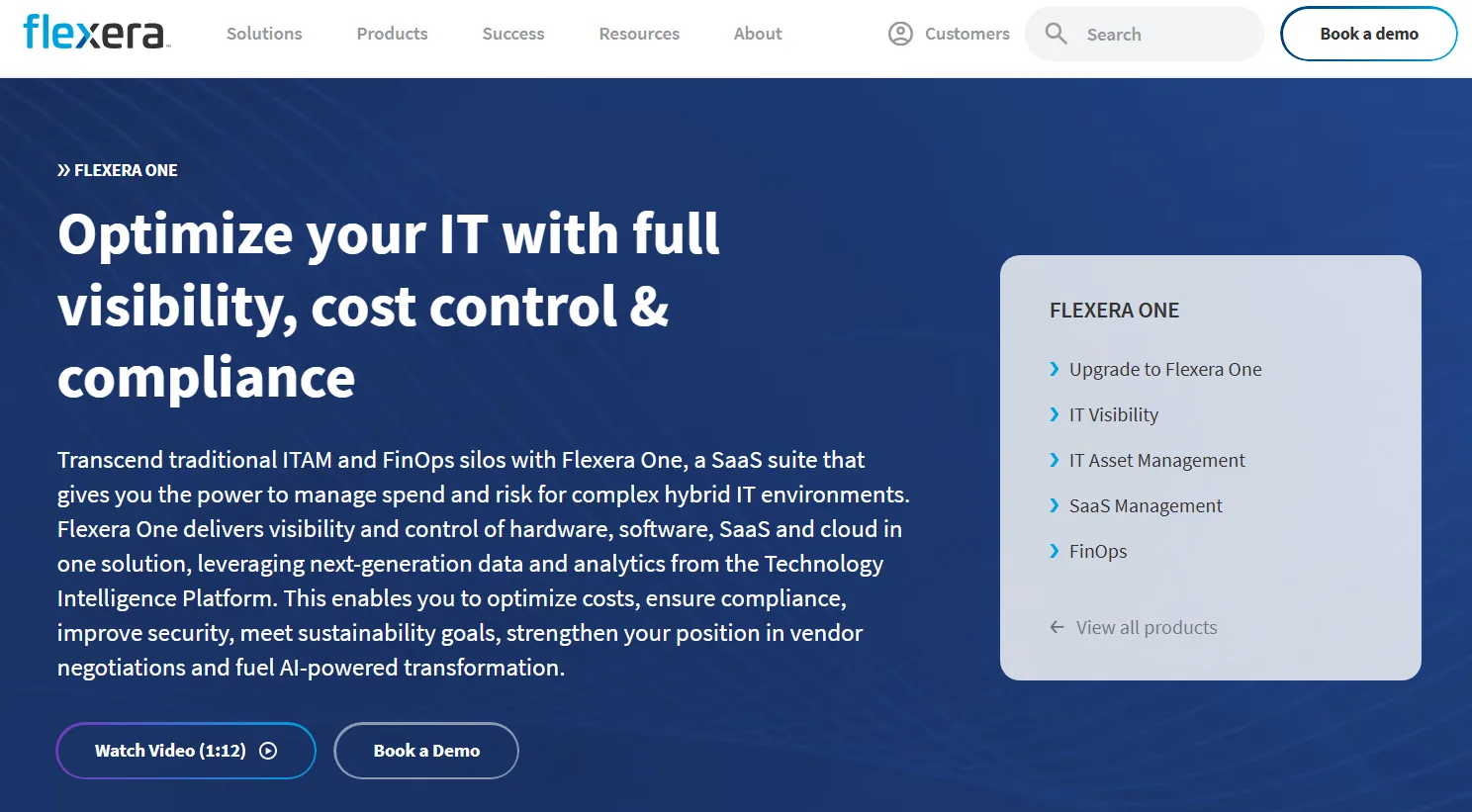
Flexera One is a SaaS platform that gives organizations deep visibility and control over software licenses, SaaS spend, and hybrid IT assets across on-premises, cloud, and SaaS environments.
Built on Flexera’s intelligence branch (including the Technopedia technology catalog), it helps teams understand what they own, what they’re using, and where they might be overspending or at risk of non-compliance.
Key capabilities
- Discovery and reconciliation: Automatically identifies installed software and matches it against entitlements to establish an accurate license position.
- Usage and optimization: Identifies underutilized licenses and flags opportunities to reclaim or consolidate seats.
- Compliance tracking: Tracks contract and vendor compliance to reduce audit risk with defensible, current data.
- SaaS and cloud visibility: Brings SaaS subscriptions and cloud spend into the same view as conventional software licenses.
Best-fit use case
Flexera One is best suited for enterprises with complex hybrid IT environments that need centralized visibility across on-premise and cloud licenses. It works well for organizations that rely on accurate license position data to support vendor negotiations, renewals, and audit readiness at scale.
Coverage and operational scope
Flexera One covers software license management across environments by consolidating discovery data, contract entitlements, and usage signals into a single system of record.
But it does not cover the physical device lifecycle behind those licenses natively. While it can detect installations through integrations, it doesn’t track device retrieval, redeployment, or real-world hardware exit events.
Where it falls short
Flexera One’s breadth is also its trade-off. The platform has a learning curve, and onboarding often requires time and effort to configure integrations and normalize data across systems. At scale, performance can slow with large datasets, and costs can also be a concern for smaller organizations, particularly when advanced modules are required.
Our verdict
Flexera One provides comprehensive coverage, deep analytics, and strong reconciliation capabilities, especially in environments where software, SaaS, and cloud spend are intertwined. However, its strength lies mainly in insight and governance, rather than in operational execution, which still relies on external tools and processes.
ServiceNow SAM
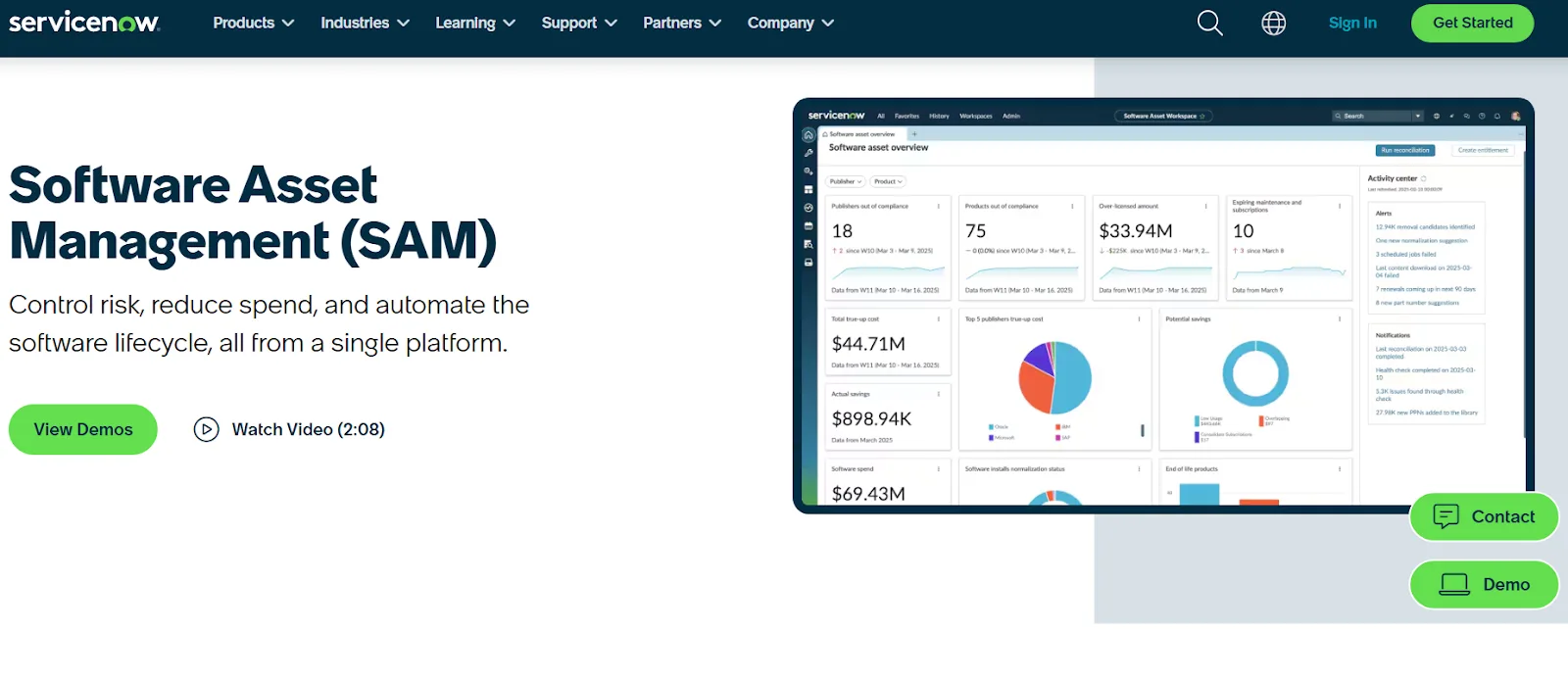
ServiceNow SAM is a license management solution built on the ServiceNow platform that helps organizations govern software usage, manage compliance, and control spend across on-prem, SaaS, and cloud environments.
For teams already using ServiceNow, SAM becomes a way to connect software entitlements with users, requests, and changes, helping IT and Finance teams understand not just what licenses exist, but how they’re requested, approved, and used over time.
Key capabilities
- License reconciliation: Matches entitlements with discovery data to calculate effective license positions and highlight compliance risk.
- Vendor-specific license models: Supports publishers like Microsoft, Oracle, SAP, and Adobe with specific metric groups.
- ITSM-native workflows: Embeds license governance into ServiceNow requests, changes, and approvals.
- SaaS license visibility: Tracks SaaS subscriptions and provides analytics with actionable data.
Best-fit use case
ServiceNow SAM is best suited for mid-to-large organizations that are already standardized on ServiceNow and want license management embedded in existing IT workflows. It works well when license governance needs to align closely with request and change management, and dedicated IT or SAM resources are available to maintain the system.
Coverage and operational scope
ServiceNow SAM covers software license management across on-prem, SaaS, and cloud environments by reconciling discovery data, integrations, and contract entitlements.
The platform also includes hardware asset management within the same ecosystem, supporting teams to track hardware records, lifecycle states, and ownership.
However, this remains largely system-of-record focused; ServiceNow can reflect device status changes, but it doesn’t natively manage the physical execution of device logistics.
Where it falls short
ServiceNow SAM can feel heavy for teams without an existing ServiceNow base. Implementation and configuration often require time, expertise, and ongoing administration to keep data accurate.
Our verdict
Although ServiceNow SAM covers hardware lifecycle conceptually within its ITAM framework, it doesn’t handle real-world physical logistics. Also, its effectiveness depends on platform maturity, data hygiene, and internal resourcing, making it better suited to established IT operations than lean or fast-moving remote teams.
ManageEngine Asset Explorer
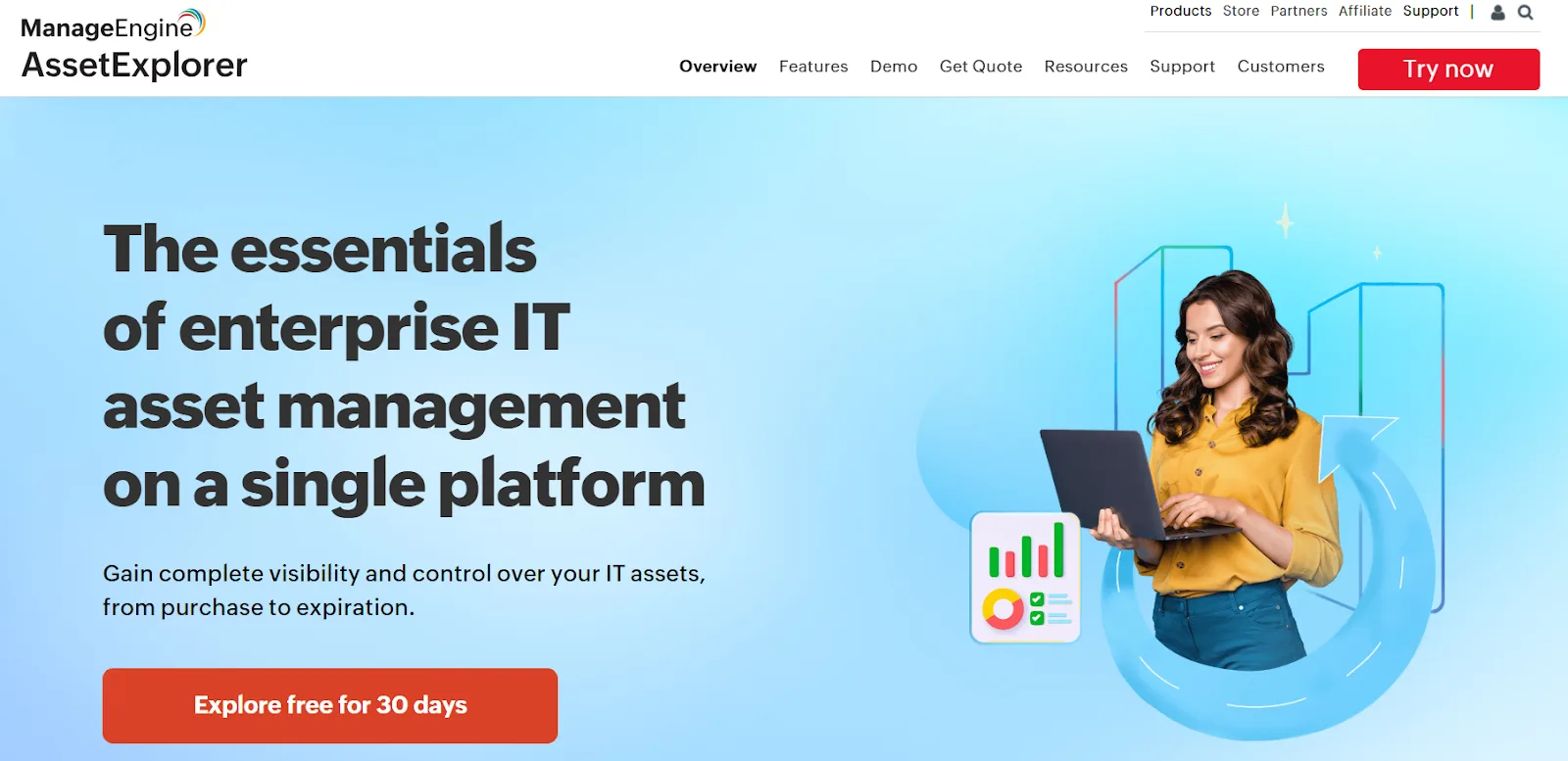
ManageEngine AssetExplorer is an IT asset management (ITAM) tool that helps organizations track hardware and software assets, manage licenses, and maintain compliance from a single console.
It is a more accessible, cost-effective alternative to heavyweight enterprise SAM tools, making it suitable for small to mid-sized IT teams that want visibility without a long implementation cycle.
Key capabilities
- Software license management: Tracks purchased licenses, compares them against installations, and highlights compliance status.
- Automated discovery: Discovers hardware and installed software using agent-based and network scan methods.
- Compliance alerts: Flags unauthorized installations to help teams stay audit-ready.
- Unified asset inventory: Maintains a single view of hardware assets, ownership, and associated software.
Best-fit use case
AssetExplorer is best suited for small to mid-market organizations that want a practical, budget-conscious way to manage software licenses and IT assets. It works well when IT teams need baseline compliance visibility and inventory control, but don’t have dedicated SAM specialists.
Coverage and operational scope
ManageEngine AssetExplorer covers software license management and hardware inventory tracking across on-prem and cloud environments by comparing discovered installations with recorded entitlements to identify compliance gaps.
On the hardware side, it tracks asset records, ownership, and lifecycle status within the system. However, this remains system-based only. Meaning, it does not manage physical device logistics, such as shipping, retrieval, redeployment, or ITAD.
Where it falls short
Some assets, especially in external or virtual spaces, still require manual intervention, which can slow inventory automation. Minor usability gaps in sorting and filtering, along with manual steps needed in certain editions, can also affect compliance accuracy.
Our verdict
ManageEngine AssetExplorer is a practical, budget-friendly option for teams that need basic license tracking and asset visibility. But for remote-first organizations with frequent joiners and leavers, its inventory-centric approach and limited optimization depth can become a constraint as scale increases.
Rippling IT
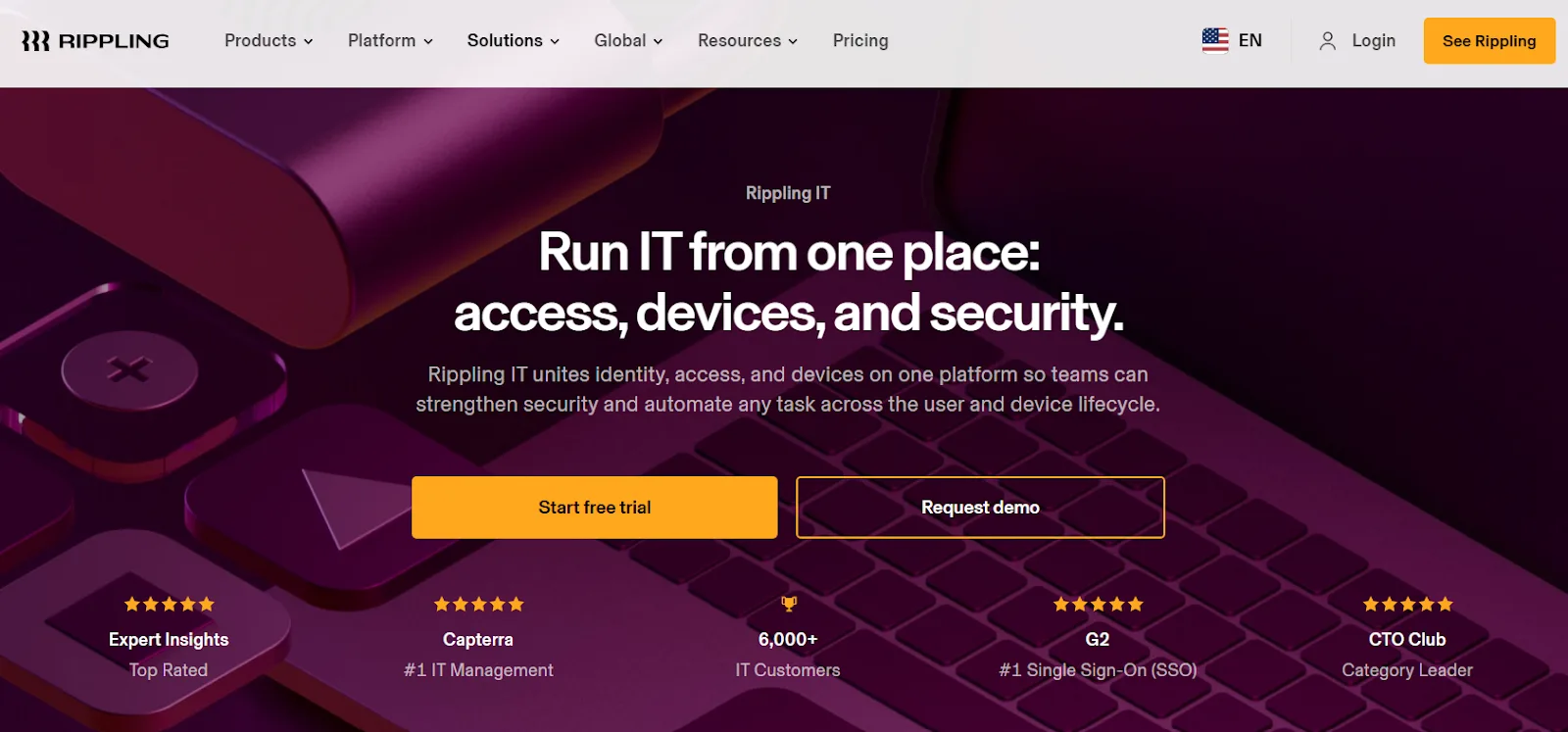
Rippling IT is part of the broader Rippling platform and focuses on device management and app access tied to employee lifecycle events.
It connects HR events (joiners, movers, leavers) with IT actions such as device provisioning and software access, serving fast-growing, remote-first companies that want to reduce manual onboarding and offboarding work.
For many teams, Rippling IT helps bridge the gap between HR systems and IT operations, automating common tasks that would otherwise require tickets, spreadsheets, or handoffs.
Key capabilities
- Automated app provisioning and deprovisioning: Assigns and removes access to SaaS applications based on employee role, department, or lifecycle stage.
- Lifecycle-based automation: Triggers IT actions automatically when employees join, change roles, or leave.
- Centralized IT dashboard: Provides visibility into devices, users, and app access from a single platform.
- Identity and Access Management (IAM): Implement SSO, MFA, conditional access, and role-based permissions based on real-time user and device attributes.
Best-fit use case
Rippling IT is a fit for remote-first teams where employee lifecycle events drive IT operations. It works best when the priority is minimizing manual joiner–leaver work and keeping access in sync with people changes, rather than managing licenses at a deep contract or compliance level.
Coverage and operational scope
Rippling IT ties device provisioning and SaaS access directly to HR lifecycle events, automating day-1 setup and day-last access removal. From a license management standpoint, its approach is access-centric, controlling who gets access to the app rather than contract-centric.
Where it falls short
The breadth of features can feel expensive for smaller or less mature teams. Specific capabilities lack deep customization or intuitive navigation. Also, advanced or global workflows may require manual workarounds before they feel polished.
Our verdict
Although Rippling IT is a software asset management platform, its license governance is primarily access- and lifecycle-driven, rather than contract-heavy. License reconciliation is tied to employee and device events, which works well for operational control, but it offers less depth for complex contract modeling.
JumpCloud
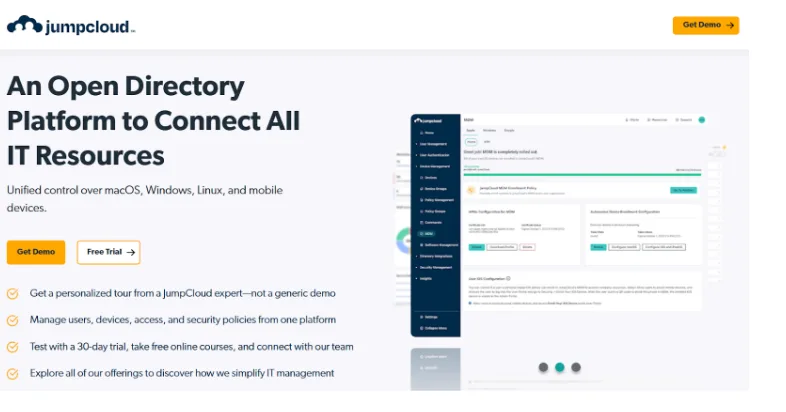
JumpCloud is a cloud directory and identity platform that also provides device management and software access control. Cloud-native teams commonly use it to centralize user identities, enforce security policies, and manage access to applications and devices without relying on traditional on-premise directories.
From a software license management standpoint, JumpCloud approaches SAM through the lens of identity and access, focusing on who has access to what SaaS subscription.
Key capabilities
- User-centric license control: Manages SaaS app access based on user identity, roles, and groups.
- Automated provisioning and deprovisioning: Grants and revokes app access automatically when users join, move, or leave.
- Single Sign-On (SSO): Centralizes login and access management across hundreds of SaaS applications.
- Device management: Logs user authentication and access events across connected systems, helping with compliance and investigation workflows.
Best-fit use case
JumpCloud is a good fit for remote-first or hybrid teams that want software access and license control to follow identity events. It works best for cloud-native organizations, especially those replacing traditional Active Directory.
Coverage and operational scope
JumpCloud covers software access management by tying SaaS licenses to user identities and group memberships. When an employee is added or removed, JumpCloud automatically provisions or revokes access across connected applications, helping prevent lingering access and unused seats.
However, JumpCloud does not manage physical device logistics such as shipping, retrieval, redeployment, or ITAD.
Where it falls short
JumpCloud’s identity-first approach can have a learning curve, especially for teams new to directory-driven tooling. As environments grow, managing policies and integrations takes effort, and license-level reporting remains lighter than in dedicated SAM platforms.
Our verdict
JumpCloud is not designed to manage the physical asset lifecycle. While it handles identity, access, and device policies well, it does not cover device logistics like procuring, shipping, or retrieval, areas where Firstbase specializes.
Jamf
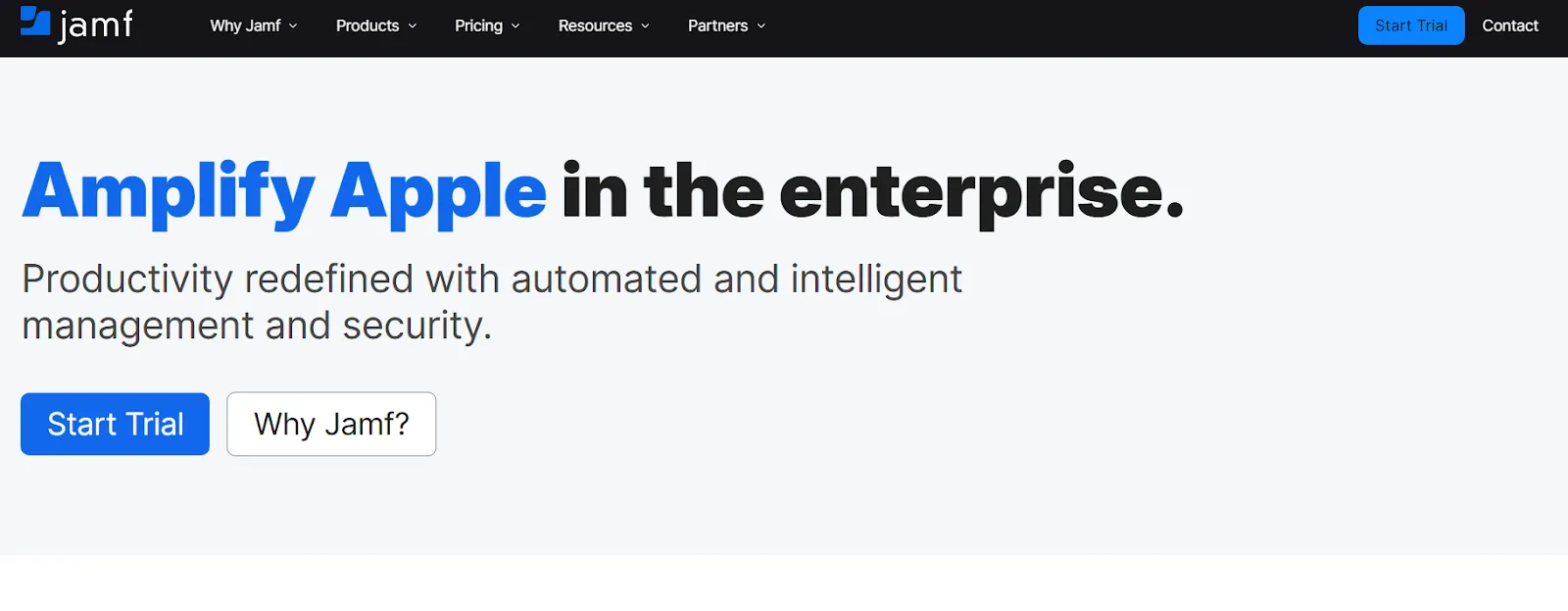
Jamf is an Apple device management (MDM) platform built specifically for managing macOS, iOS, and iPadOSdevices at scale. Organizations with Apple-heavy environments widely use it to deploy devices, manage configurations, enforce security policies, and distribute applications.
From a software license management perspective, Jamf operates at the device and app execution layer: controlling how applications are deployed and removed on Apple devices, rather than providing full contract-level license governance.
Key capabilities
- Apple device management (MDM): Enrolls, configures, secures, and manages Apple devices throughout their in-use lifecycle.
- App deployment and removal: Installs and removes apps on managed Apple devices, including App Store and custom apps.
- Apple Business Manager integration: Manages app licenses purchased through Apple’s Volume Purchase Program (VPP), supporting assignment and reassignment of apps to devices or users.
- Security and compliance enforcement: Applies device policies, encryption settings, and compliance rules to maintain endpoint security.
Best fit use case
Jamf is best suited for IT teams managing Apple-first or Apple-heavy fleets, where the priority is ensuring device configuration, app deployment, and security policy enforcement.
Coverage and operational scope
Jamf covers application deployment and license execution on Apple devices, particularly for apps distributed through Apple Business Manager (ABM). However, Jamf’s license visibility is limited to apps deployed on managed Apple devices, not broader organizational software spend.
Also, it does not manage physical device logistics such as procurement, shipping, retrieval, zero-deployment, or ITAD.
Where it falls short
While it is good at managing Apple devices, it lacks cross-platform license visibility and reconciliation that dedicated SAM tools provide. Its focus on Apple ecosystems can also limit its usefulness for organizations with mixed-device environments.
Our verdict
Executing software access and app license control on Apple devices, making it a strong choice for Apple-centric IT environments. However, its limitations on license management capabilities (around deployment and assignment) make physical asset lifecycle management tools like Firstbase a better fit.
A Quick Snapshot: Firstbase Vs. Traditional SAM Tools
| Platform | Primary strength | What it does well | Where Firstbase goes further |
|---|---|---|---|
| Firstbase | Lifecycle execution | Manages devices from procurement → retrieval → ITAD with operational SLAs. | The only platform that ties licenses to real device custody and verified recovery events. |
| Flexera One | License intelligence and compliance | Deep discovery, reconciliation, and audit readiness across SaaS and on-prem. | Stops at insight; no physical device recovery or logistics execution. |
| ServiceNow SAM | ITSM-embedded governance | Strong workflows and entitlement tracking inside ServiceNow. | Tracks status changes, but doesn’t run global device retrieval or shipping. |
| ManageEngine AssetExplorer | Cost-effective ITAM | Basic license tracking and asset inventory. | Inventory only; no automation for retrieval or logistics. |
| Rippling IT | HR-driven automation | Fast joiner–leaver access control. | Access-centric; not contract- or device-exit aware. |
| JumpCloud | Identity and access control | Clean SaaS access provisioning and deprovisioning. | Identity controls don’t extend to physical hardware recovery. |
| Jamf | Apple device control | App deployment and license assignment on Apple devices. | Apple-only, and no end-to-end hardware lifecycle. |
Why Device Data Is the Missing SAM Layer
Software Asset Management (SAM) traditionally focuses on license contracts, usage, and compliance, but software doesn’t run in a vacuum. It runs on physical endpoints, and without accurate device-level data, SAM programs operate with blind spots that translate into financial leakage and risk.
- SAM programs reduce waste, but only with full visibility: With full governance and optimization, SAM can cut software spend by up to 60%, but this outcome depends on tying license data to real device usage.
- License discovery without device exit data creates inefficiency: Discovery tools reconcile installations and entitlements, but without device exit status, licenses on unrecovered hardware continue to be counted as active.
- Missing hardware data increases audit and compliance risk: Unknown or “orphaned” installations inflate measured usage during audits, which can lead to unplanned purchases or penalties.
- Device management gaps drive operational waste: Only 15% of IT leaders report full visibility into their software environments, leaving 85% with blind spots that include unmanaged installations and devices.
How Firstbase Covers the Missing SAM Layer
Firstbase closes the critical gap most SAM tools leave open: device-linked execution, not just entitlement visibility. By automating hardware lifecycle workflows with measurable outcomes, Firstbase ties license revocation to real physical events: procurement, deployment, retrieval, and retirement.
With Firstbase, you get:
- 97%+ device retrieval success rate thanks to automated workflows and pre-paid return kits.
- %+ on-time delivery & retrieval reliability with SLAs that ensure equipment reaches employees and is returned when planned.
- $100,000 saved annually in shipping costs for remote and hybrid teams through optimized global logistics.
- 5,000+ hours saved per year in labor by eliminating manual logistics, tracking, and asset reconciliation.
- Live, real-time fleet visibility with inventory status, assignments, and custody captured in a single dashboard.
What’s Next?
Traditional SAM tools manage software records, not device custody. Without verified recovery, organizations lack assurance that software access and sensitive data have fully exited unrecovered devices.
Firstbase adds an execution layer to SAM by enforcing device recovery, remote lock or wipe, and retirement workflows across distributed environments. Devices are secured, tracked, and sanitized in line with NIST 800-88 data guidelines, ensuring license removal happens alongside the actual hardware retrieval.
For teams operating at scale, this results in lower licence leakage, fewer manual reconciliations, and audit-ready visibility across users, devices, and assignments.
The key takeaway here is: A licence only truly leaves your balance sheet when the laptop it runs on is returned, secured, or retired. Firstbase automates that final-stage recovery, turning reclaimed seats into measurable cost savings and reduced operational risk.
Still paying for software because devices haven’t been recovered or confirmed as returned? See how Firstbase strengthens your licence management strategy with automated recovery workflows and lifecycle enforcement. Book a demo to explore how execution closes the gap between licence records and real-world device status.
Written by
Chris Herd
Chris Herd is the visionary founder and CEO of Firstbase, recently acquired by AppDirect, who pioneered the end-to-end hardware provisioning platform now used by tens of thousands of remote employees. Including employees from Spotify, UI Path, Verint and WeWork. With roots in fintech, Chris experienced firsthand the logistical pains of remote hardware management. His company has since scaled, backed by top-tier investors like Andreessen Horowitz and Kleiner Perkins, before its recent strategic acquisition. As an outspoken champion of remote-first culture, Chris continues to shape how companies equip, empower, and trust their distributed teams.
Get started with
Firstbase today
Remote and hybrid work aren't going anywhere. It's our mission to make it easier to manage the assets your distributed team needs—from onboarding through offboarding and every repair, replacement, and upgrade in between.
Fill out the form and a member from our team will reach out by phone!
Get a Live Demo