Top Asset Retrieval Services: Closing the Retrieval Gap
Where retrieval breaks down for distributed teams — and the platforms that fix it.
 Ahmad ZakariaMay 26, 2026
A company laptop is still with a former employee working remotely, weeks after offboarding. IT can see the device in the system, but there is no active retrieval in motion. Finance only becomes aware of the asset when it is written off.
There is no defined trigger to initiate retrieval, no assigned owner for follow-ups, and no consistent tracking once the device is returned.
This problem shows up differently across roles but is linked to the same operational breakdown:
- For IT leaders: Retrieval stalls despite MDM visibility, leaving devices untracked post-offboarding.
- For people ops: Offboarding workflows end without ensuring actual device return.
- For finance: It ends up as write-offs, audit risks, and repeated replacement costs.
Teams that implement structured asset retrieval workflows — HRIS-triggered offboarding, coordinated return logistics, and end-to-end tracking — can save up to 30% on IT asset costs. Large organizations lose over 100 laptops annually, with each costing approximately $2,272 to replace.
This article covers where retrieval breaks down, the financial impact of those gaps, what strong platforms include, and the top asset retrieval services that can reliably own the outcome.
We're Firstbase, and we understand this category from the inside. We've kept this comparison balanced, evaluating tools based on retrieval ownership, core capabilities, limitations, geographic coverage, and suitability for your team size and operations.
TL;DR: Top 6 Asset Retrieval Services at a Glance
| Platform | Best Fit | Core Strength | Retrieval Approach | Automation |
|---|---|---|---|---|
| Firstbase | Global teams, 50–1,500 employees | End-to-end lifecycle | Fully managed, automatic | High |
| GroWrk | Cross-border device shipping | Global logistics | Logistics-led | Moderate |
| Workwize | Multi-vendor visibility | Lifecycle control layer | Integrated lifecycle | High |
| Unduit | Large fleets, recovery + resale | Value recovery and ITAD | Recovery-led | Moderate |
| Iron Mountain | Compliance-focused enterprises | Compliance and ITAD | Managed after initiation | Low–Moderate |
| Hello Retriever | Small teams, simple retrieval | Retrieval-first simplicity | Retrieval-focused | Moderate |
What Are Asset Retrieval Services? And What Good Ones Actually Do?
Asset retrieval services return company devices when employees leave. But most "retrieval" solutions only handle how devices are shipped back — not when retrieval begins, how it's managed, or what happens after. This creates two distinct models:
| Layer | Retrieval Services | Retrieval Infrastructure |
|---|---|---|
| Trigger | Manual (IT/HR initiates) | HRIS-triggered automated workflows |
| Return | Return labels, prepaid kits | Coordinated pickups via global couriers |
| Tracking | Basic shipment tracking | End-to-end chain of custody |
| Security | Not included/external | NIST-certified data destruction |
| Recovery | Not included | Resale value recovery + redeployment |
Firstbase operates as retrieval infrastructure, supporting the full lifecycle from offboarding initiation to post-return outcomes such as redeployment and resale. Teams retrieve 1.5x more laptops for reuse while enabling tax-optimized device movement in 2–5 days.
SEE IT IN ACTION
Take a self-guided tour of Firstbase
See how the retrieval workflow runs end to end — from HRIS-triggered offboarding to warehouse receipt and redeployment.
Take the Tour →6 Best Asset Retrieval Services in 2026
Asset retrieval is now a core part of IT operations for distributed teams. Here are the top 6 platforms to consider.
Firstbase
Best for: Global teams with 50 to 1,500 employees needing automated offboarding-led retrieval and reuse
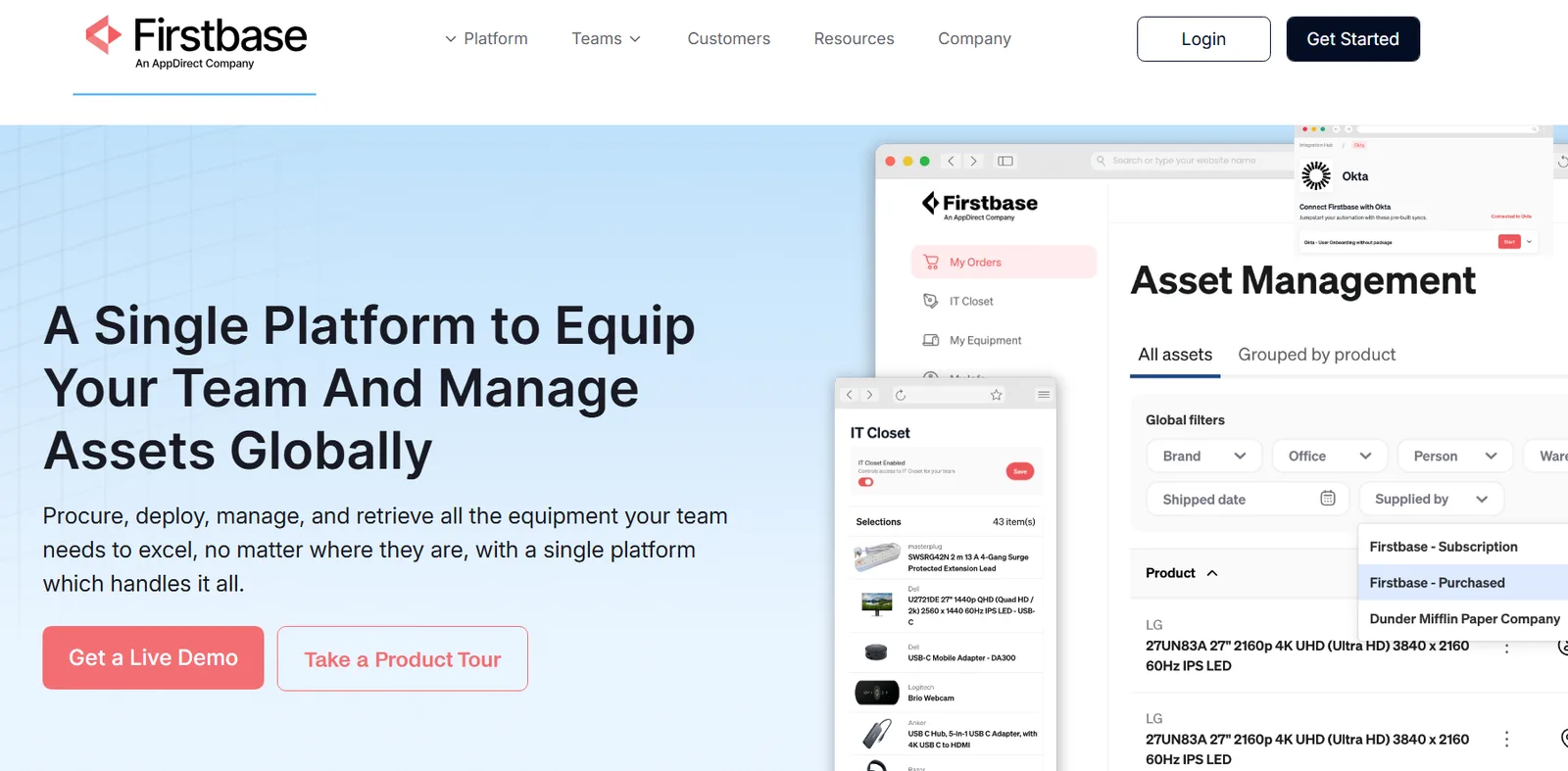
Firstbase focuses on what tends to break in remote teams: devices going missing between offboarding, logistics, and follow-ups. Its lifecycle control begins the moment offboarding starts, giving IT continuous visibility while reducing HR coordination overhead.
- 97% device recovery rate: Typical offboarding workflows see only 30% of devices returned on time without structured follow-ups.
- HRIS + MDM retrieval triggers: Integrates within 1–2 days to automate offboarding-triggered workflows.
- Prepaid return kits: Reduces IT workload on asset logistics by up to 75%.
- Complete chain of custody: Real-time GPS tracking and audit-ready logs, improving asset tracking accuracy by up to 1.8x.
- Certified data destruction: NIST 800-88 compliant wiping, ESG-ready reports, quarterly resale credits, and certificates of destruction.
Firstbase actually communicates with us and feels like a true partner. They help us expand into new regions and manage existing ones, making our operations across eighteen time zones seamless. If I had to sum up Firstbase in one phrase, I'd say: it works.
Ryan Bacon, IT Manager at JumpCloud
Global coverage: 150+ countries across North America, EMEA, and APAC.
Limitations
Dependence on its logistics network can impact retrieval speed in some regions.
GroWrk
Best for: Global teams needing cross-border shipping for device retrieval
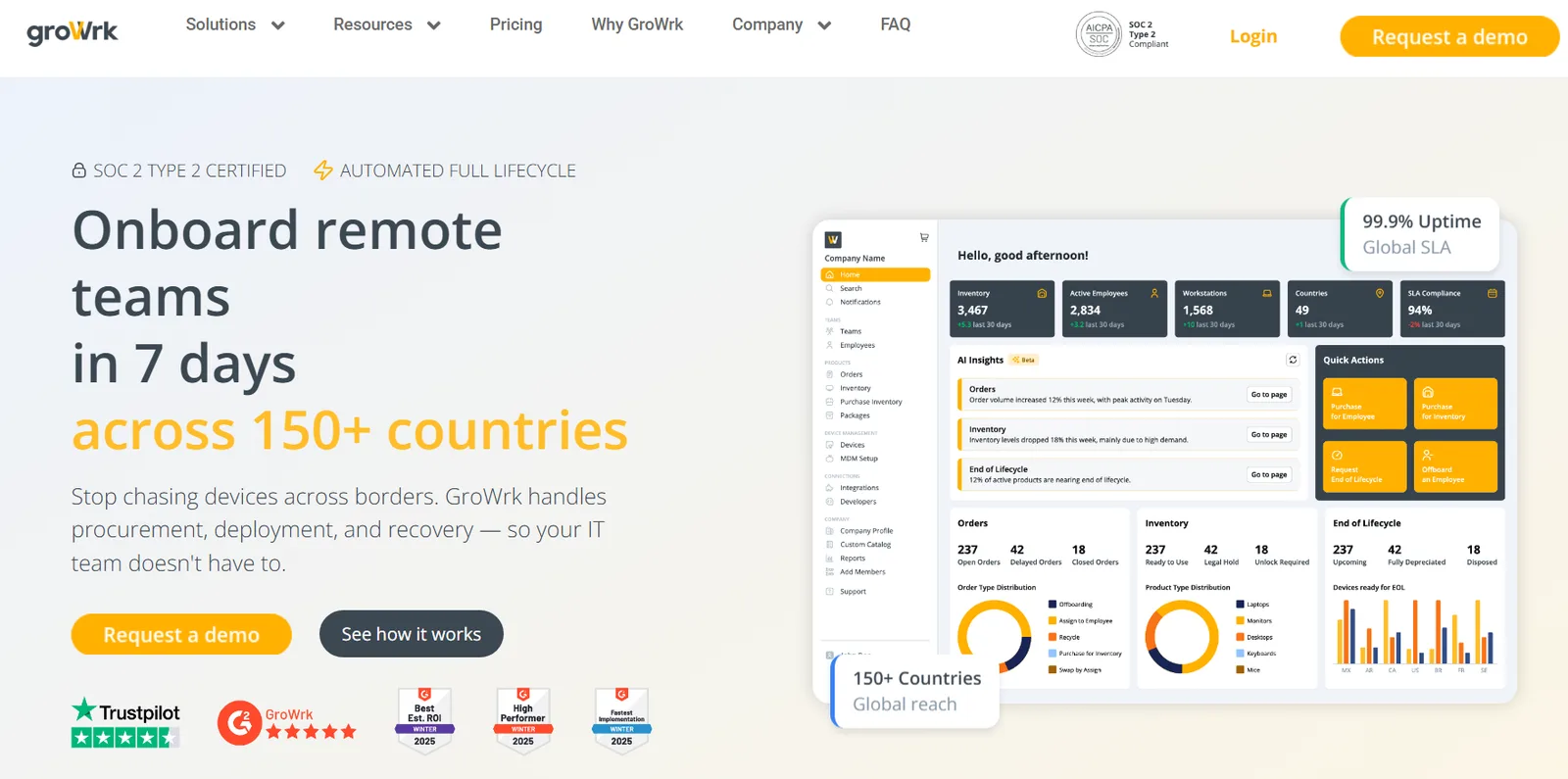
GroWrk focuses on global device logistics, helping companies manage equipment across regions. It supports automated return workflows, including shipment coordination and tracking across 150+ countries.
- MDM compatibility: Works with Kandji, JumpCloud, and others for device control during retrieval.
- Centralized asset management: Tracks device records and lifecycle data in one place.
- Global return logistics: Coordinates pickups and return shipping across regions.
- Secure data destruction: NIST 800-88 and ISO 27001 aligned IT asset disposition with certificates.
Limitations
Device status and retrieval timelines lack clarity due to delayed updates. At times requires repeated follow-ups on already submitted information.
Workwize
Best for: Teams with multiple vendors needing visibility into retrieval workflows
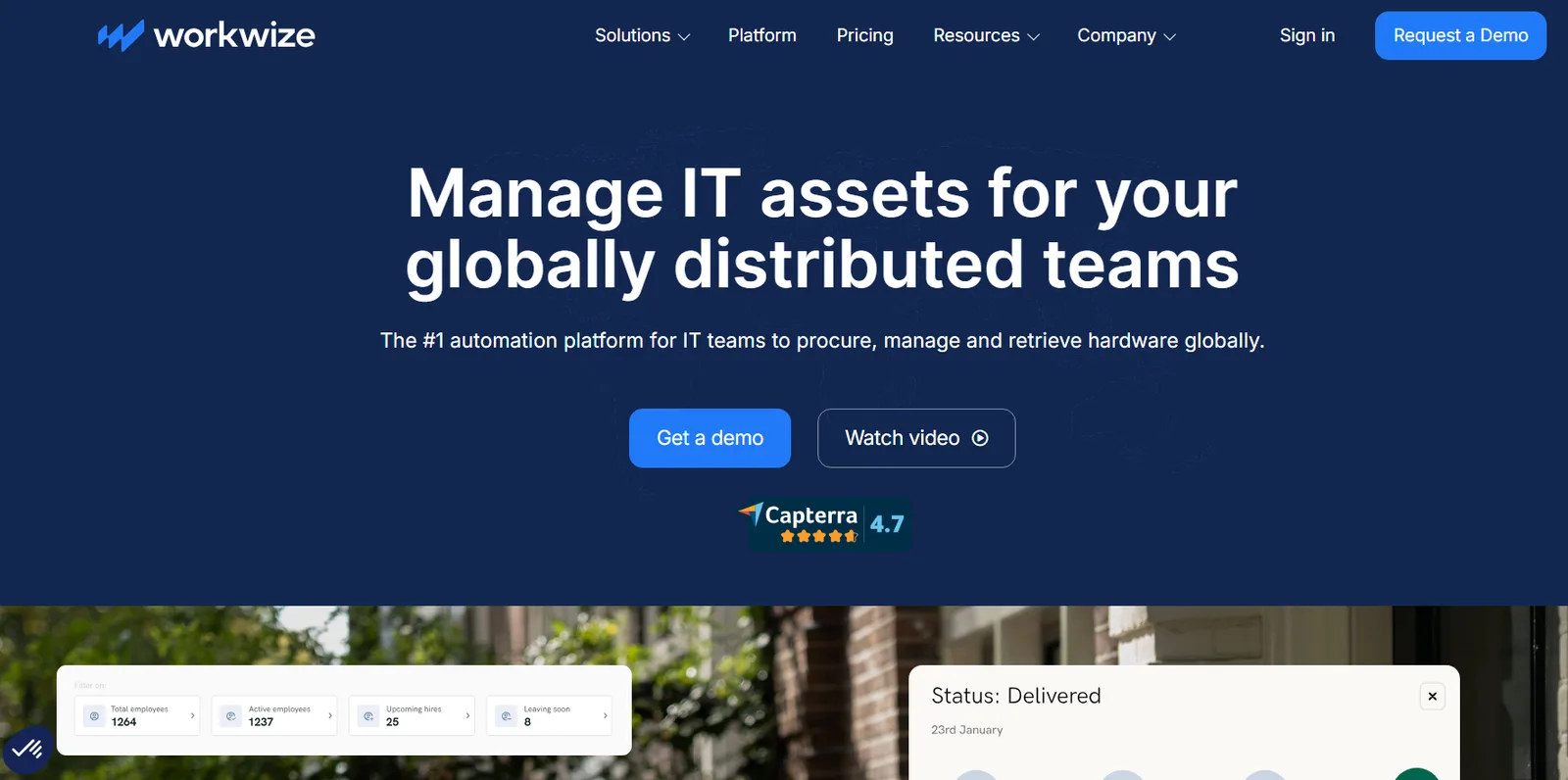
Workwize handles device logistics across provisioning, management, and returns, with retrieval built into the same operational flow. It triggers retrieval through HRIS integrations at offboarding, covering 100+ countries.
- Return kits with prepaid shipping: Standardizes the offboarding return process.
- Exception visibility: Surfaces devices falling outside expected timelines.
- Device refurbishment: Refurbishes returned devices for reuse and handles resale.
- Warehousing and redistribution: Regional warehouses for storing and redistributing devices.
Limitations
Expensive ($8–$18/employee per month) and implementation can take months. Retrieval performance inconsistent outside the US with reported delays.
Unduit
Best for: Large fleets focused on asset recovery and resale value
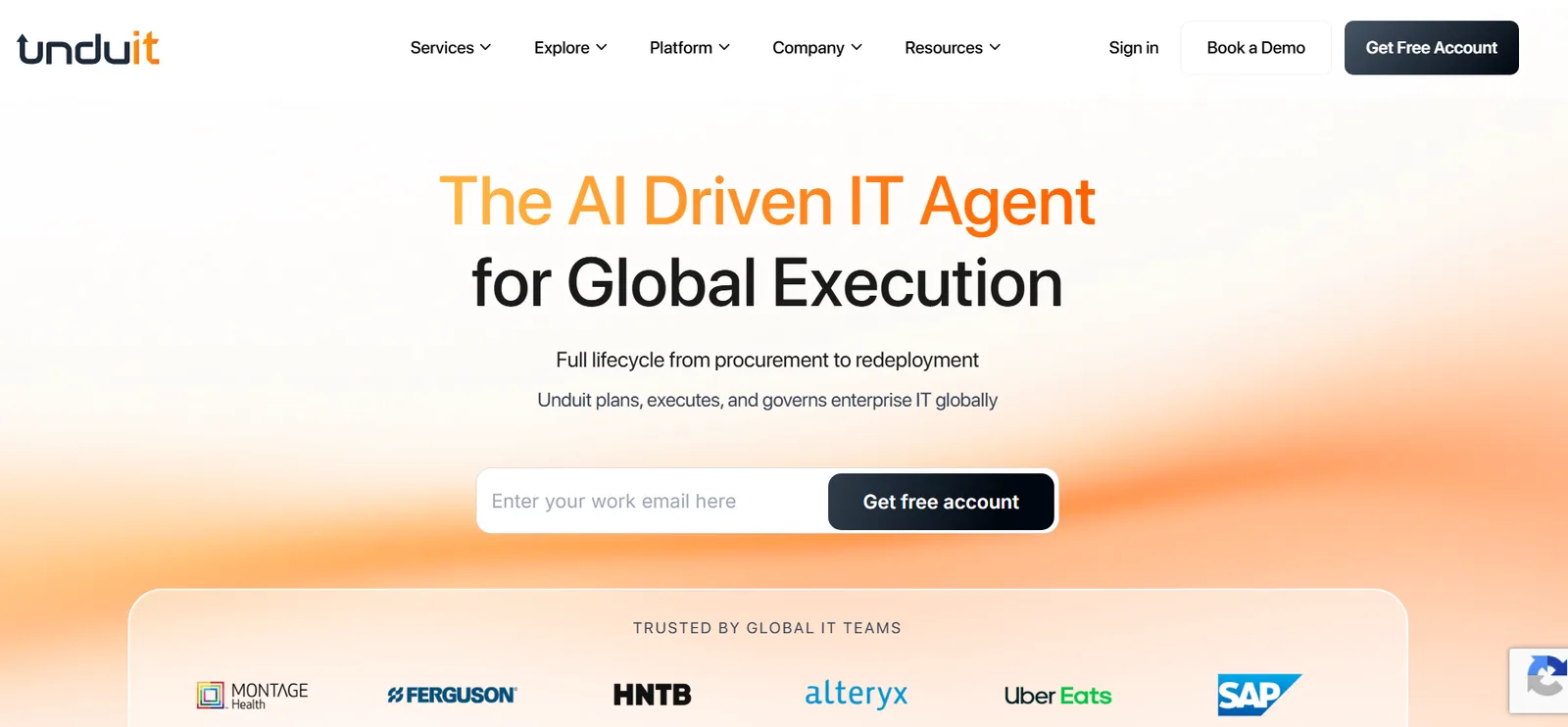
Unduit approaches asset retrieval as part of a value recovery system — devices are routed into refurbishment, resale, or recycling to recover financial return and ensure compliance. Supports 100+ countries.
- Certified data erasure: GDPR and HIPAA aligned sanitization before reuse or resale.
- Bulk recovery for fleets: Manages large-scale retrieval across distributed teams.
- Integrated ITAD: Routes unusable devices into certified disposal workflows.
- Financial reporting: Visibility into cost offsets from resale and recovery.
Limitations
Recovery model focuses heavily on post-return value extraction, with less emphasis on offboarding-triggered automation and employee-side return coordination.
Iron Mountain
Best for: Enterprises needing compliant asset disposal and managed logistics
Iron Mountain is a records and information management provider that also handles IT asset disposition. Its retrieval sits inside a broader compliance and storage ecosystem, operating across 50+ countries.
- Remote employee retrieval: Shipping kits for distributed workforce device recovery.
- GPS-tracked secure logistics: Dedicated fleets with trained personnel for safe asset movement.
- Centralized tracking and reporting: Pickup requests, real-time tracking, and audit logs.
- IT asset remarketing: Tests, refurbishes, and resells devices to recover residual value.
Limitations
Setup and integration require effort from internal teams. Executes reliably once initiated, but does not reduce internal coordination effort across HR and IT.
Hello Retriever
Best for: Smaller teams needing simple retrieval-only workflows
Hello Retriever is a retrieval-first platform for returning laptops and monitors from remote employees. It also offers warehouse, deployment, and disposal features. Mainly operates in the US, UK, and Canada.
- Prepaid return kits: Padded boxes with labels, instructions, and packaging materials.
- Centralized dashboard: Live view of every return with status tracking across shipment, transit, and receipt.
- Integrated ITAD: DoD 5220.22-M and NIST 800-88 aligned data erasure with compliant disposal.
- Exception handling: Follow-ups, escalations, and re-engagement when employees don't return on time.
Limitations
Limited to US, UK, and Canada coverage. Main focus is retrieval with limited support for procurement and full asset lifecycle management.
What Does Poor Asset Retrieval Actually Cost Distributed Teams?
Teams often treat asset retrieval as a logistics task. But in practice, it's an accountability gap across HR, IT, and Finance. The impact shows up in compliance exposure, replacement spend, operational time, and recurring write-offs.
| Gap | What happens | Financial impact | How Firstbase addresses it |
|---|---|---|---|
| Devices not recovered | Employees keep devices after exit and never return them. | 1 in 4 companies report losing at least 5% of endpoint devices during offboarding → direct asset write-offs. | Auto-kits recover 23% more devices. Triggers return kits + labels through HRIS integration; no manual chasing. |
| Delayed collection | Employees return devices late, forcing teams to purchase replacements. | Devices depreciate over 3–5 years, but delays trigger early repurchase → duplicate spend. | Automated device collection in <10 min. GPS tracking from door to warehouse, full visibility. |
| Manual coordination | IT and HR manage requests, follow-ups, and logistics manually. | 73% of teams face major operational challenges from manual asset tracking → increased operational overhead. | Reduces logistics workload by up to 75% through automation. |
| Lack of visibility | Devices are untracked during transit and return. | Increases loss risk + audit gaps (no chain of custody). | Real-time SOC 2 audit logs replace spreadsheets. Provides 97%+ retrieval rate vs 80–85% manual. |
| Value loss after return | Devices sit idle or are not processed quickly. | Unused 70% of the time; utilization falls from 70% to 30%. | Drives 1.5× more laptops reused, improving recovery outcomes. |
| No recovery workflows | Returned devices are not resold or reused. | 40–60% residual value lost without structured recovery. | Recovers 40–65% of laptop value. AI triage to quickly refurbish/resale possibilities. |
What Does It Take to Ensure Devices Are Recovered at Offboarding, Every Time?
Asset retrieval becomes reliable when ownership, coordination, and visibility are part of a single, structured workflow. As teams scale across regions, having a system that standardizes retrieval and tracks every step reduces loss, delays, and audit risk.
Firstbase brings this structure into place — connecting offboarding triggers, employee coordination, and device tracking into one lifecycle layer that works alongside your existing IT stack.
Written by
Ahmad Zakaria
Ahmad Zakaria covers IT operations, hardware lifecycle management, and distributed workforce solutions at Firstbase. His content is built from real customer data, operator interviews, and hands-on experience managing devices across 150+ countries.
Get started with
Firstbase today
Remote and hybrid work aren't going anywhere. It's our mission to make it easier to manage the assets your distributed team needs—from onboarding through offboarding and every repair, replacement, and upgrade in between.
Fill out the form and a member from our team will reach out by phone!
Get a Live Demo